

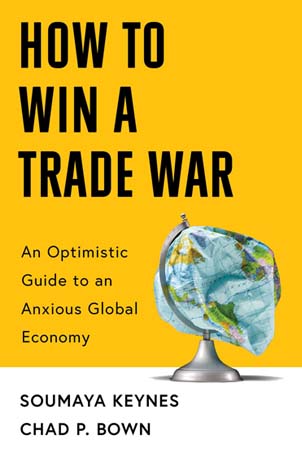

Overview: The authors explore the history, the players, and the rules of trade, and consider how we can prepare for what the future might hold. What would all-out economic warfare look like? Could trade wars lead to hot wars? What can the West learn from China? Accessible and leavened with an appealing wit, this book […]

This issue of Economic Lens discusses the State Ownership Policy Document and provides commentary on it.
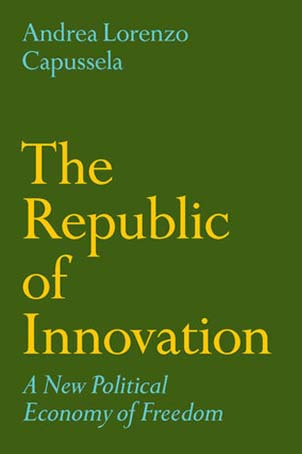
Overview: True freedom, Capussela writes, arises when no one is subject to another’s will, be that the will of an employer, Big Tech, or the so-called elite. A society that strives toward this higher ideal will become more innovative, as increasing numbers of people are granted enough security to flourish, experiment, and take risks. Capussela […]
This issue of Economic Lens explores the relationship between the development of new cities and population redistribution, analyzing the extent to which these cities have contributed to achieving more balanced urban development in Egypt.

Overview: What people believe about the economy—and why it matters How do expectations about the future influence economic behavior? For decades, economists have known that beliefs play a central role—from how much households spend, to how firms set prices, to how central banks design policy. But figuring out exactly how expectations affect decisions has been […]

This issue focuses on the pricing mechanism for petroleum products and natural gas, examining how opacity in pricing harms investment and increases uncertainty for energy sector stakeholders. It also highlights how this lack of transparency drives hedging, which further fuels inflation. Finally, the issue offers proposals to improve Egypt’s pricing mechanism by drawing on best […]

Abstract: Estimating causal treatment effects in observational settings is frequently compromised by selection bias arising from unobserved confounders. While traditional econometric methods struggle when these confounders are orthogonal to structured covariates, high-dimensional unstructured text often contains rich proxies for these latent variables. This study proposes a Neural Network-Enhanced Double Machine Learning (DML)framework designed to leverage […]
This issue of “Economic Lens” examines some international experiences in the iron and steel industry, with a particular focus on how trade protection policies can be designed to enhance the industry’s competitiveness while minimizing their cost to the economy.